

 Английский язык
 Французский язык
 На испанском языке
 Русский язык
 Корейская народно-демократическая республика
 На японском языке
Deodorized Rosemary Extract for Pet Food: Preventing Kibble Rancidity Without Affecting Palatability
To meet global clean-label demands, premium pet food brands are rapidly replacing synthetic antioxidants (BHA, BHT, TBHQ) with natural botanical alternatives to extend shelf life- да- да- да- да.
However, standard plant extracts often trigger a critical formulation failure: severe palatability refusal during two-bowl testing, as catsиdogs are highly sensitive to raw botanical odors.
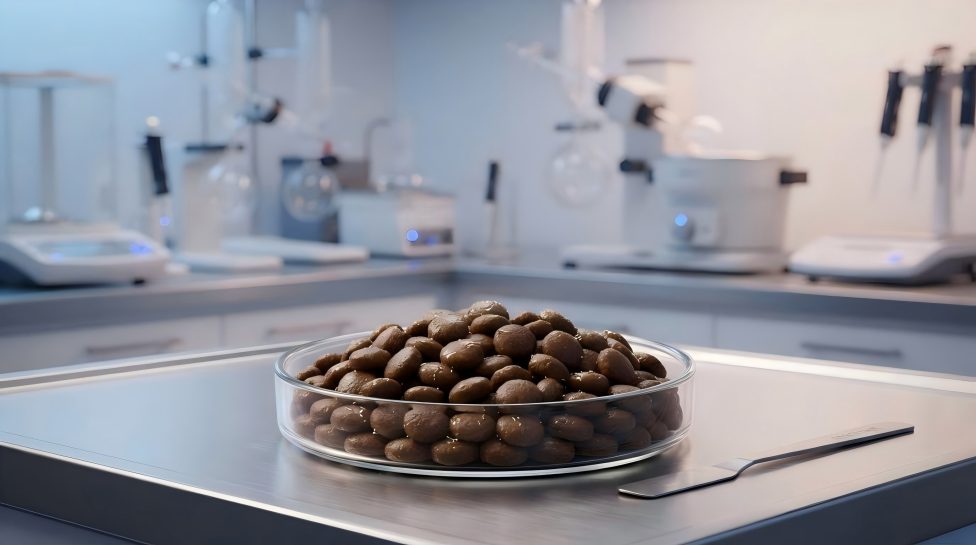
Traditional rosemary extracts carry intense camphoraceous notes. When vacuum-sprayed onto kibbles, these harsh aromas mask natural meat flavors, leading to immediate food rejection by companion animals.
To stop fat rancidity without compromising acceptance, manufacturers need a sensory-neutral stabilization strategy. The definitive solution lies in premium deodorized carnosic acid, a lipophilic antioxidant engineered for zero-odor pet food preservation.
Molecular Distillation: The Technology Behind Odor-Free Preservation
The root cause of palatability refusal lies in specific volatile organic compounds (VOCs) native to raw rosemary: camphor, 1,8-cineole, and borneol. Standard extraction methods fail to isolate these aromatic fractions, leaving a pungent profile that triggers immediate animal rejection.
To solve this, Технология "зеленый источник" utilizes advanced multi-stage molecular distillation. Operating under high vacuum and precise thermal control, this process separates volatile odor molecules from the high-molecular-weight active antioxidants without degrading their structural integrity.
This purification yields a highly refined deodorized carnosic acid. The resulting oil or powder retains maximum efficacy while presenting a neutral sensory profile that blends seamlessly into premium pet food matrices.
The industrial material flow and refining stages are structured as follows:
Process Stage | Operating Conditions | Material Output | Functional Impact |
1. Raw Input | Ambient Extraction | Crude Rosemary Extract | High antioxidant activity but contains pungent volatile VOCs. |
2. Distillation | High Vacuum & Precise Temp | Separation Phase | Isolates active carnosic acid; vaporizes volatile aromatics. |
3. Discharge | Condensation Phase | Volatile VOCs Removed | Eliminates Camphor, Cineole, and Borneol to clear odors. |
4. Final Product | Quality Controlled | Sensory-neutral, high-purity oil/powder for coatings. |
Our finished ingredient alters performance measurably, as shown in the Sensory Evaluation Matrix below:
Sensory Attribute | Crude Rosemary Extract | Green Spring Deodorized Carnosic Acid | Impact on Pet Palatability |
Camphoraceous Odor | Strong / Medicinal | Undetectable | Prevents olfactory refusal and sniffing rejection. |
Herbal Aftertaste | Bitter / Lingering | Neutral | Protects target meat and fat flavor integrity. |
Visual Appearance | Dark Green / Yellow | Light / Decolored | Avoids dark or unnatural tints on finished kibbles. |
By integrating this refined ingredient, formulators ensure that premium kibble coatings remain highly appealing to animals while gaining long-term oxidative protection.
Quantitative Efficacy: Rancimat Testing and Oxidative Stability Data
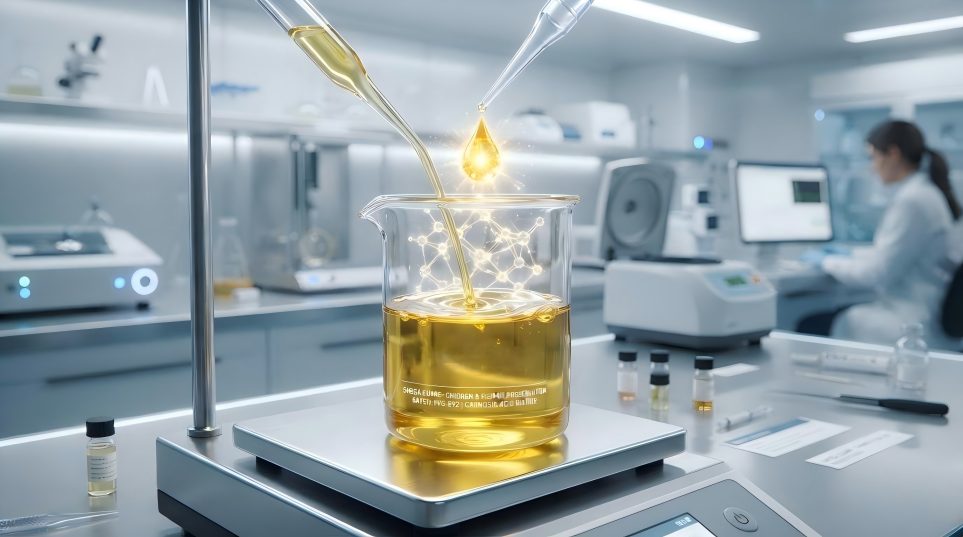
To validate the cost-efficiency of natural preservation, formulators rely on rigorous stress-testing data. At Технология "зеленый источник", the efficacy of our deodorized carnosic acid is strictly benchmarked using the Rancimat Method (AOCS Cd 12b-92)—the global standard for evaluating oxidative stability in fats and oils under accelerated thermal stress.
During industrial testing, premium pet-food grade chicken oil and fish oil—both highly vulnerable to rancidity due to high polyunsaturated fatty acid profiles—were subjected to constant airflow at 110°C.
Our laboratory metrics prove that deodorized carnosic acid performs at a level that directly matches or exceeds traditional synthetic alternatives. The definitive data from our Oxidative Induction Time (OIT) trials are structured below:
Antioxidant Variant | Dosage (ppm) | Chicken Oil Induction Time (Hours at 110°C) | Fish Oil Induction Time (Hours at 110°C) | Protection Factor (PF) vs. Control |
Control (No Additives) | 0 | 4.2. Раздел 4.2 | 1.8 | 10 ч.00 м. |
Synthetic BHT | 200 | 18.5 | 6.4 | 4.11 |
Synthetic TBHQ | 200 | 24.1 | 9,8. Общее положение | 5.56 |
Green Spring Carnosic Acid | 200 | 22.8 | 9.1 | 5.23 |
The data confirms that a minimal dosage of 200 ppm of our standardized carnosic acid boosts the oxidative resistance of volatile pet food oils by over 500%.
Furthermore, our ingredient demonstrates exceptional thermal resilience during the Высокая температура воздухаextrusion and vacuum coating stages. While volatile synthetic antioxidants suffer significant evaporation losses at temperatures above 120°C, the triterpenoid structure of carnosic acid remains physically stable, ensuring uncompromised long-term protection throughout the entire commercial shelf life of the kibble.
Request Samples for R&D Testing
Supply Chain Compliance: Seamless BRC & IFS Audit Integration
Global pet food manufacturers operate under strict frameworks requiring complete ingredient traceability. Uncertified supply chains introduce regulatory risks and severe compliance bottlenecks during routine supplier audits.
To eliminate onboarding hurdles, Технология "зеленый источник" operates facilities certified under the highest benchmarks of the Global Food Safety Initiative (GFSI): BRC (Grade A) and IFS Food.
Our core regulatory qualifications are structured below:
Compliance Core | Certification Status | Target Sourcing Value |
Food Safety Standard | BRCGS Grade A | Top-tier processing safety; minimizes global brand risk. |
Traceability Framework | IFS Food Certified | Full batch transparency from harvest to final distillation. |
Regulatory Standing | FDA Registered & Non-GMO | Compliant import dossiers ready for rapid onboarding. |
Our strict quality management ensures every batch of deodorized rosemary extract meets international import standards:
Total Traceability: Uncompromised chain-of-custody from raw botanical harvesting to final molecular distillation.
Contaminant Control: Heavy metal, microbe, and pesticide thresholds strictly governed to exceed EU and US FDA rules.
Solvent Security: Advanced analytical verification ensures ultra-low solvent residues for clean-label compliance.
By partnering with a 26-year established manufacturer, your quality assurance (QA) department can streamline paperwork and skip costly on-site pre-audits, accelerating product time-to-market.

Industrial Manufacturing Application Guide: Optimizing Kibble Processing
In commercial pet food manufacturing, natural antioxidants face extreme degradation risks during mechanical processing. To ensure uninterrupted shelf stability, R&D formulators must deploy deodorized carnosic acid at precise critical control points (CCPs) within the production line.
The triterpenoid structure of carnosic acid provides outstanding thermal resilience, but processing methods differ sharply depending on the ingredient form:
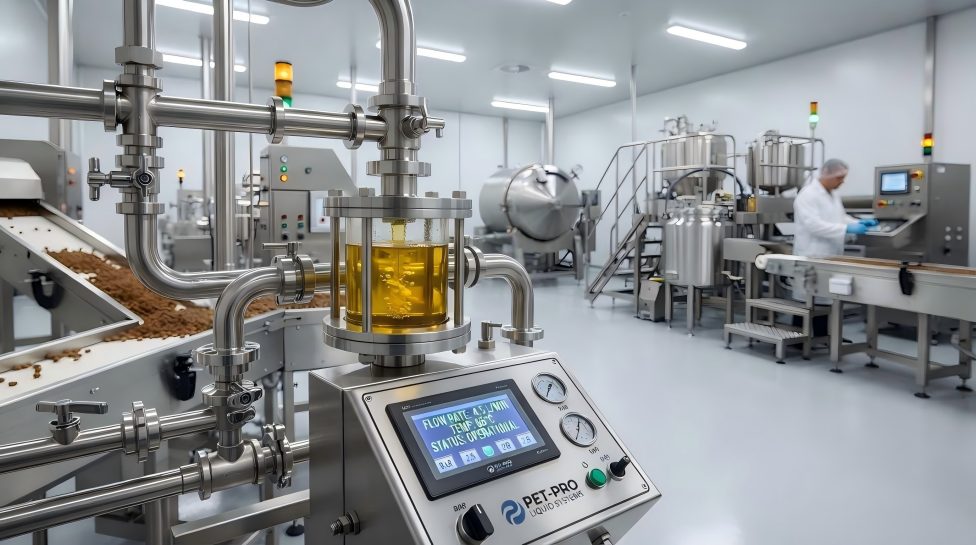
Standardized 10%–50% Carnosic Acid Oil: Best suited for automatic liquid pumping systems. It must be pre-mixed directly into the core fat source (e.g., chicken fat, fish oil) inside the bulk holding tank. The fat blending temperature should be maintained at 45°C to 55°C to achieve homogenous molecular dispersion before it enters the vacuum coater.
5% Carnosic Acid Powder: Best suited for dry-mix operations. It must be introduced directly into the dry ingredient ribbon blender along with the grain, pulse, and meat meal pre-mixes prior to the conditioning phase. This ensures uniform distribution throughout the kibble matrix before water and steam are injected.
The industrial material flow, manufacturing stages, and process parameters are structured below:
Processing Phase | Raw Material Input | Recommended Product Variant | Target Operational Parameters | Critical Processing Goal |
1. Pre-Extrusion Dry Mix | Dry Raw Materials | Blend evenly in raw ribbon blender before steam conditioning. | Protects the internal kibble matrix during high-shear cooking. | |
2. Cooking & Shaping | Conditioned Mash | Extruder In-Feed | Process through extruder matrix at 120°C to 140°C. | Forms the kibble structure while locking in baseline matrix stability. |
3. Lipid Blending | Core Fats & Oils | 10%–50% Carnosic Acid Oil | Dissolve into holding tank at 45°C–55°C with constant agitation. | Ensures complete antioxidant solubilization inside the liquid fat carrier. |
4. Post-Extrusion Coating | Baked Kibbles + Treated Oils | Standardized Oil Blends | Apply via Vacuum Coating at a target dosage of 200–500 ppm. | Forms an even, non-oxidizing outer shield over volatile surface lipids. |
During high-temperature, high-pressure extrusion (120°C to 140°C), internal antioxidants inevitably suffer a 10% to 15% thermal loss. Therefore, applying the decolored, deodorized oil blend via vacuum coating (post-extrusion) remains the most effective industrial method to coat the exterior lipids without affecting the kibble's palatability.
FAQ: Technical Support for Pet Food Formulators
Our technical support team addresses critical questions from global R&D formulators and quality compliance officers regarding natural oxidation control:
Q: Does your deodorized rosemary extract alter the final color or appearance of premium kibbles?
A: в случае: в случае: в случае: в случае: No. Through advanced multi-stage molecular distillation, we thoroughly decolor our extract. It leaves a neutral, translucent profile that prevents dark or green tints on the finished kibble surfaces, maintaining organic product appeal.
Q: How does carnosic acid maintain physical stability during high-temperature extrusion?
A: Carnosic acid possesses a robust triterpenoid molecular structure. Unlike volatile synthetic alternatives that evaporate above 120°C, our standardized compound exhibits exceptional thermal resilience up to 140°C, retaining over 85% active efficacy post-extrusion.
Q: Can Green Spring supply comprehensive batch traceability data for stringency audits?
A: Yes. Backed by our BRCGS Grade A and IFS Food certifications, every commercial lot delivers a bulletproof chain-of-custody dossier. We provide a complete COA, heavy metal/microbe metrics, and pesticide screening sheets upon request.
Q: What is the recommended shelf-life stability window for treated pet oils?
A: At a standard industrial dosage of 200–500 ppm, our deodorized oil blends extend the induction period of chicken and fish oils by over 500% under Rancimat testing, guaranteeing a stable commercial shelf life of 12 to 24 months.
Secure Your Sample: Streamline Your Formulation Transition
Accelerating your shift toward clean-label, high-palatability pet food requires verified physical raw materials and precise technical documentation. Green Spring Technology provides immediate, batch-certified support to streamline your R&D and QA verification workflows.
Select the strategic entry point that matches your current corporate onboarding phase:
For R&D Formulators: [Request a Free 20g Benchmark Sample Batch] to conduct internal two-bowl palatability and olfactory acceptance testing.
For QA & Sourcing Managers: [Download BRC/IFS Certificates & Request a Bulk Quote] to initiate immediate compliance paperwork review and pricing analysis.
All ingredients are fully certified under BRCGS Grade A, IFS Food, and ISO22000 safety management systems, guaranteeing seamless global supply chain integration.
-
Предыдущий
Rosemary Extract vs. Synthetic Antioxidants: Extending the Shelf Life of Plant Oils
-
Следующий проект
20% Water-Soluble CoQ10 Powder: Achieving Crystal-Clear Solutions in Functional Drinks